The Twenty-Antibody Cap That Lasted Twenty-Four Days
On September 25 UnitedHealthcare raised its new specific IgE testing limit from 20 allergen specific antibodies a year to 29, and backdated the increase to September 1, the same date the 20 took effect. The 20 was the published number for twenty-four days of dates of service. Four lines of business got four different clocks, the Medicaid policy exempts seven of the twelve states its own bulletin announces it for, and nobody has said what happens to the September denials.
On August 21 this desk told you UnitedHealthcare's new allergen testing cap was twenty specific IgE antibodies a year, counted per code rather than pooled, charged against the member regardless of which lab ran the assay.
That was the number in the June bulletin, the July bulletin, the August bulletin and the September bulletin. Four consecutive editions, same sentence, same word: twenty.
The cap is twenty-nine.
UnitedHealthcare put the expansion in its October bulletins, which posted to uhcprovider.com on September 25. The sentence reads that effective for dates of service on or after September 1, 2026, the consideration for reimbursement of specific IgE in vitro allergy testing is expanded "from 20 to 29 allergen specific antibodies per year for individuals 20 years of age or older."
September 1 is the day the twenty took effect.
"What do you do with a claim denied against a limit the payer has already withdrawn?"
So the twenty governed dates of service from September 1 through September 24 and was replaced by a document published on the twenty-fifth, retroactive to the start (chart below). The policy itself, number 2026R8021B, was not rewritten until October 1, thirty days after the effective date of the number it now carries.
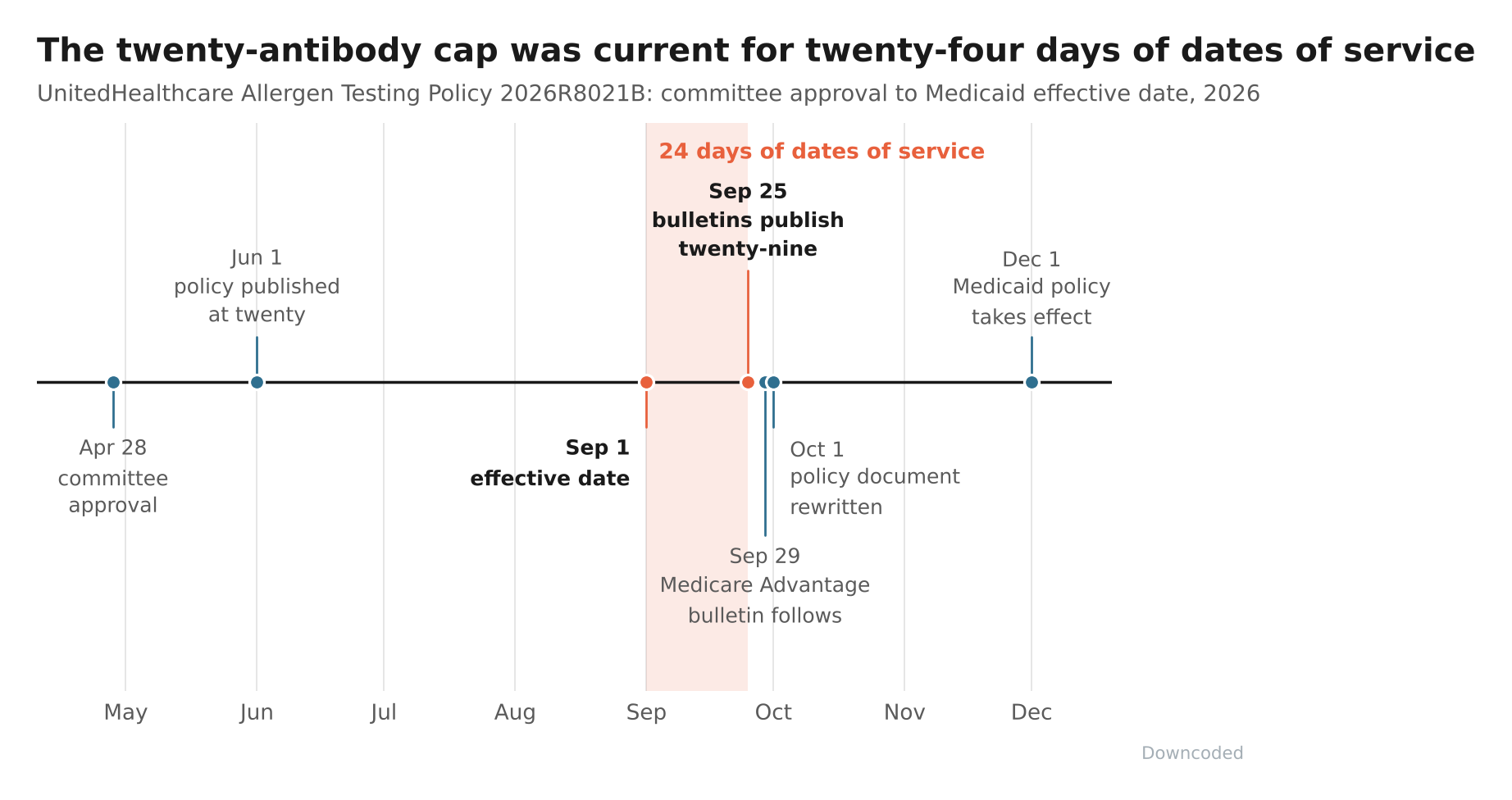
Nothing in any of the four October bulletins says what happens to claims already adjudicated at twenty. There is no reprocessing language, no adjustment project, no mass adjustment notice.
The expansion is announced the way a routine policy revision is announced, which is the part worth pulling September data over.

The rest of this brief is for subscribers.
The impact tables, the code-level detail, and the rest of the analysis sit past this line.
$50 a month, or $500 a year.
Already a subscriber? Sign in