What Happens to the Hospice Cap Money Nobody Collects?
The FY 2027 hospice aggregate cap published this morning at $36,174.75, $35.36 below what CMS proposed in April. MedPAC now puts 28% of hospices over the cap, about $750 million a year in overpayments, and OIG audits of the three MACs that collect it found between 4% and 27% of the money written off as uncollectible.
The FY 2027 hospice aggregate cap hit the Federal Register this morning at $36,174.75 a patient, effective October 1. That is $35.36 below the $36,210.11 CMS floated in April, because the agency reran the update with May claims data and the payment update settled at 2.3% instead of 2.4%.
Nobody reprices a hospice over thirty-five dollars.
The number sitting underneath it is worth the attention.
"If a quarter of the field is already over the cap, who is actually paying it back?"
The cap stopped being an outlier
MedPAC's March report to Congress puts the estimated share of hospices exceeding the aggregate cap at 19% in 2019, 2020 and 2021, then 23% in 2022, then 28% in 2023 (chart below). Those above-cap providers furnished care to about 8% of hospice patients.
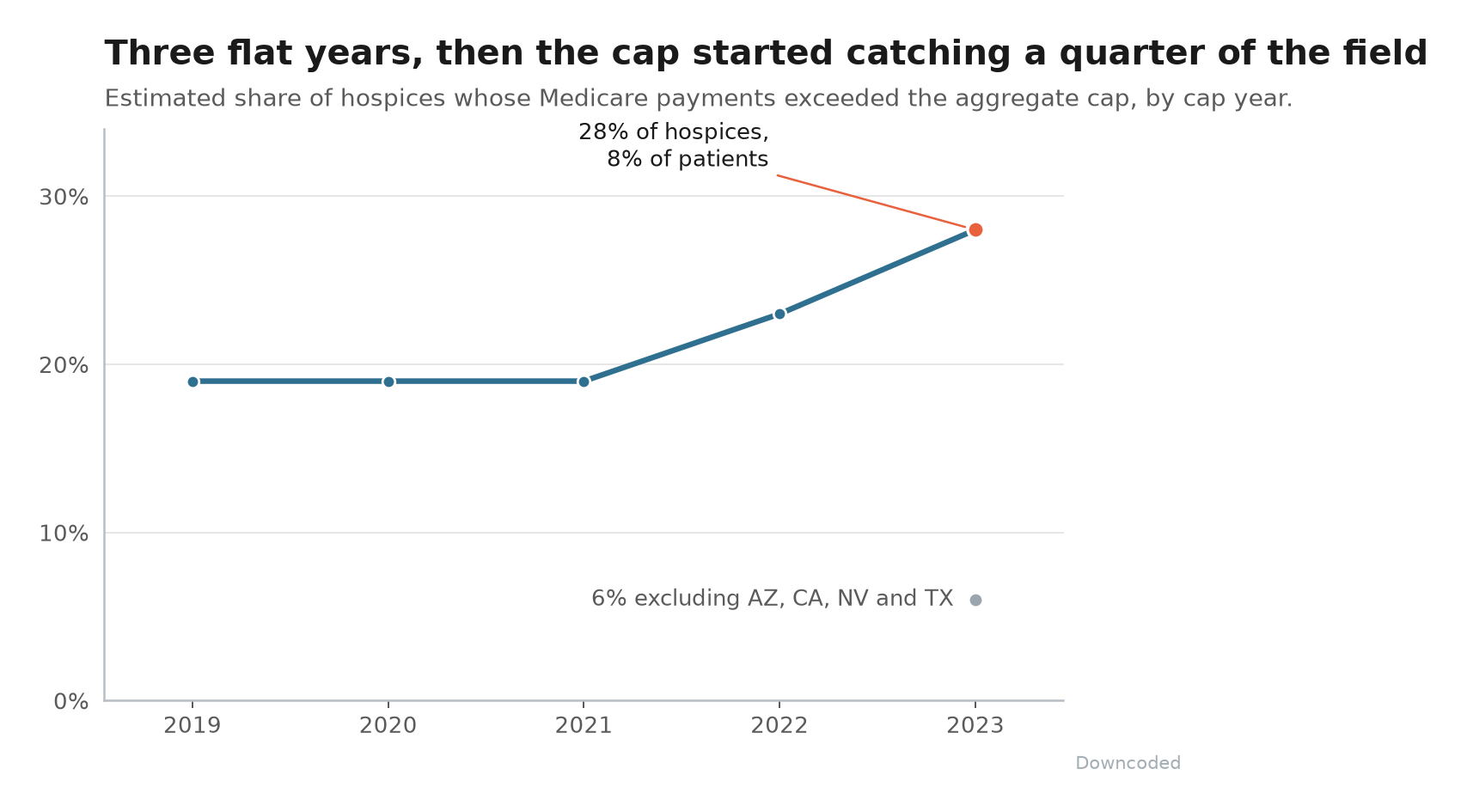
Nearly all of the move is four states. Strip out Arizona, California, Nevada and Texas and the 2023 share is about 6%, up from 5% the year before.
Inside those four, more than half of California's hospices went over, and Arizona, Nevada and Texas each ran 30% to 40%.
The four-state concentration is not a coincidence of medical practice. It tracks provider entry: the hospice count went from 4,840 in 2019 to 6,535 in 2023, and California alone added 1,046 of them.
Here's the mechanism nobody adjusts for.
The per diems are wage adjusted, with a 66% labor share on routine home care multiplied by the hospice wage index. The cap is a flat national dollar figure with no geographic adjustment at all.
So the same clinical stay burns through the cap faster in a high-wage market than a low-wage one. A commenter on this rule told CMS the wage index "can at times cause hospice providers in States like California to reach hospice cap payment thresholds in less than 4 months."
CMS gave the jurisdictional answer: it has no statutory authority to geographically adjust the cap, replace it, or update it any other way, because section 1814(i)(2)(B)(ii) tells it exactly what to do. And Congress just extended that arrangement. Division J, section 6218 of the CAA, 2026 pushed the payment-update-based indexing out to accounting years ending before October 1, 2035, where it had been set to revert to CPI-U in 2033.

The rest of this brief is for subscribers.
The impact tables, the code-level detail, and the rest of the analysis sit past this line.
$50 a month, or $500 a year.
Already a subscriber? Sign in