What Happens When Your Hospital Quits Medicare Advantage?
More than 20 health systems have dropped or narrowed MA contracts this year, and insurers pushed 2.9 million members off their plans. We trace what an exit market does to the revenue cycle on both sides of the divorce.
A patient checks in for a January follow-up. Same clinic, same physician, same insurance card as October.
The eligibility response comes back out of network.
Nothing about her plan changed. Her health system spent the fall in a contract dispute with her insurer, the dispute ended in a termination, and the front desk is the first place the termination becomes real.
Multiply her by every MA patient on the schedule and you have the January that revenue-cycle teams in a dozen markets are already staffing for.
The wave is real, and it has two anchors
Becker's is tracking more than 20 health systems that have dropped or narrowed Medicare Advantage contracts in 2026, and the list keeps growing. These aren't rural one-offs: Mayo Clinic went out of network with most UnitedHealthcare and Humana MA plans, Mount Sinai left Anthem's, UNC Health suspended Humana, WellCare, and HCSC, and Mass General Brigham dropped UnitedHealthcare and BCBS Massachusetts.
The systems cite the same three grievances in nearly every announcement: prior-authorization denials, slow reimbursement, and administrative cost.
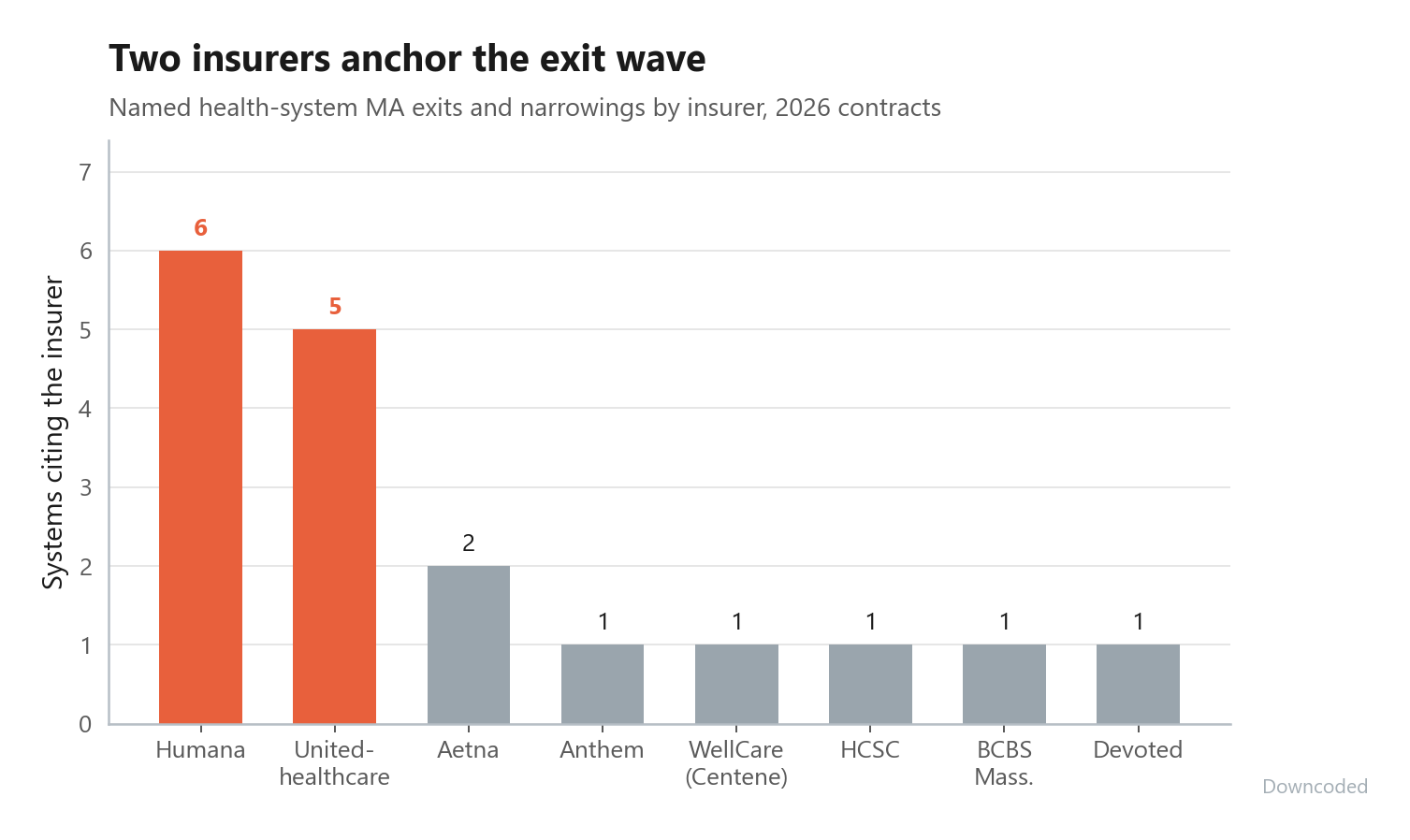
Count the insurers across the named exits and the pattern is blunt (chart below). Humana appears six times, UnitedHealthcare five, and no other payer more than twice.
Roughly half of Medicare beneficiaries now sit in MA plans. When a system walks, the affected book isn't a niche line, and the work lands on whoever runs eligibility, authorization, and AR in that market.

The rest of this brief is for subscribers.
The impact tables, the code-level detail, and the rest of the analysis sit past this line.
$50 a month, or $500 a year.
Already a subscriber? Sign in