The Senate Wants the Algorithms
Blumenthal and Hawley gave UnitedHealthcare, Humana, and CVS until Monday to hand over their denial-algorithm inventories. We read the record already on the table, and what a revenue-cycle lead should do with it now.
"Is it still company policy that technology cannot make the final denial?"
That, in substance, is the question Senators Blumenthal and Hawley put to UnitedHealthcare, Humana, and CVS Health in letters sent July 14. The senators want records on how each insurer decides post-acute coverage, an inventory of every predictive technology in the decision path, and a straight answer on whether software makes final calls.
The deadline is Monday, July 28.
It's a bipartisan letter, which matters. And it isn't a fishing expedition: the letters cite fresh HHS OIG findings that, in the senators' words, call into question the companies' claims of having reduced prior-authorization burden.
What's already on the record
The reason the senators know what to ask for is that a Senate investigation already forced the file open once. The Permanent Subcommittee on Investigations' October 2024 report, built on 280,000+ pages of internal documents, found that between 2019 and 2022 all three insurers denied post-acute prior-authorization requests at far higher rates than everything else they reviewed.
The 2022 numbers are the ones worth taping to a wall (chart below). Humana's post-acute denial rate ran more than 16x its overall rate, and UnitedHealthcare and CVS each ran about 3x.
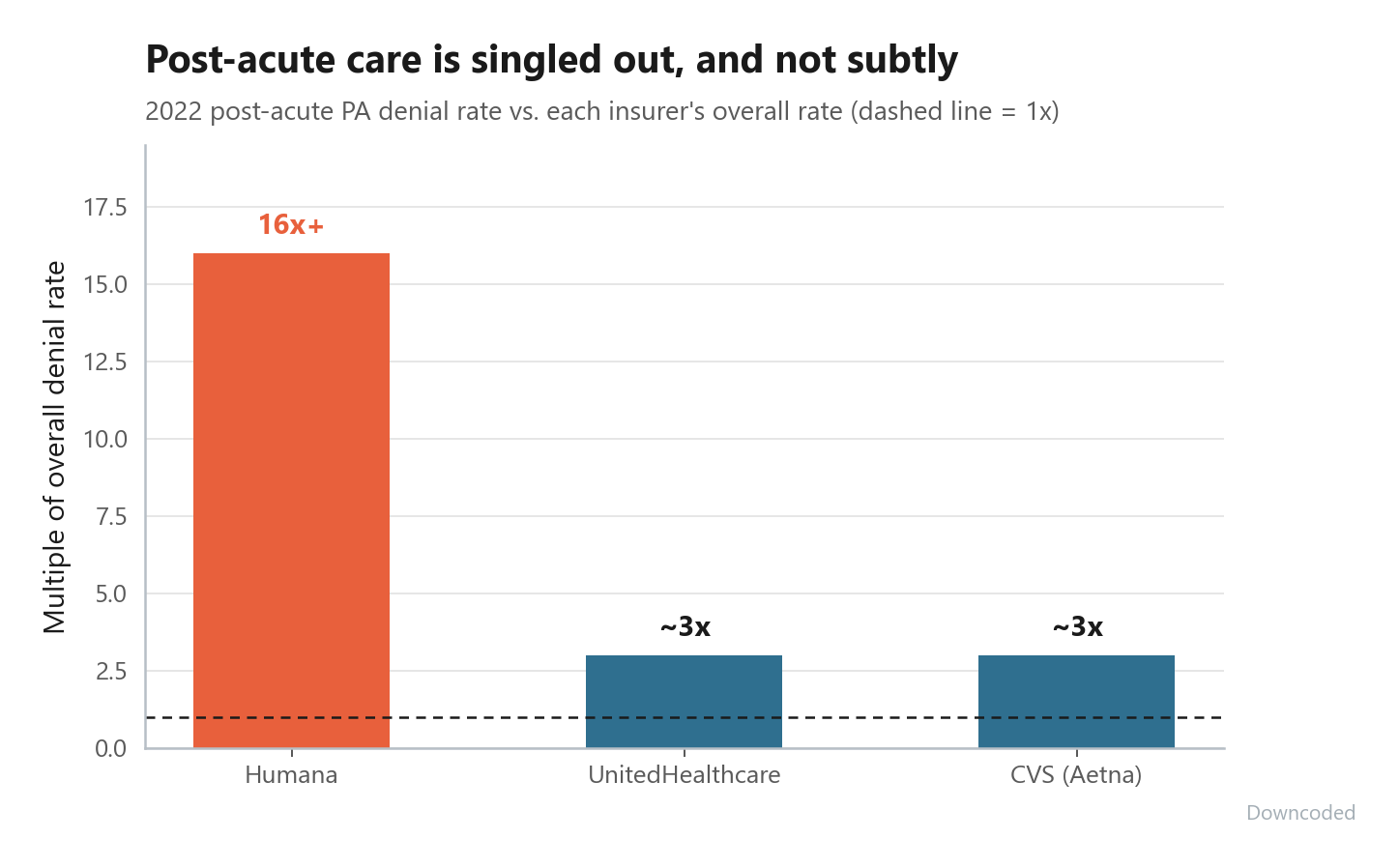
The three companies cover nearly 60% of MA enrollees, so this is most of the post-acute market, and post-acute is where your SNF, LTACH, IRF, and home-health referrals live.

The rest of this brief is for subscribers.
The impact tables, the code-level detail, and the rest of the analysis sit past this line.
$50 a month, or $500 a year.
Already a subscriber? Sign in